Home / El Niño in South Africa
El Niño 2026: what it means for your water
Yes, 2026 is an El Niño year, and a strong one. The South African Weather Service (SAWS) expects a drier, hotter summer than normal over most of the country. The north-eastern half is most at risk, from late spring to mid-summer. The last strong El Niño, in 2015/16, brought the worst drought on record to southern Africa. Five provinces were declared disaster areas, groundwater levels fell, and one Johannesburg driller’s quote requests jumped five-fold.
Dams are full going in, so the first thing most people will feel is not empty dams. It is heat, longer water cuts when demand spikes, and boreholes that run low where the water table drops.
- Niño-3.4 sea temperature
- +2.1°C
- Chance it stays strong to March 2027
- over 83%
- Vaal Dam, 12 Oct
- 108.2%
- Drilled holes that came up dry
- about 1 in 9
By Ironstone Boreholes. Published 17 October 2026, checked 17 October 2026.
Is 2026 an El Niño year?
Yes. NOAA’s Climate Prediction Center has an El Niño advisory in effect. In its 8 October update the key Pacific sea temperature reading was 2.1°C above normal, and a strong to very strong El Niño is likely through January–March 2027 (a greater than 83% chance). NOAA puts the chance that October–December will be stronger than any El Niño since 1950 at 83%. SAWS has warned it could become the strongest event in living memory.
When will El Niño end in South Africa?
Forecasters expect it to last at least to the end of the 2026/27 summer, through about March 2027. For South Africa the summer months matter most, because that is when the summer-rainfall provinces get their rain. SAWS’s outlook is drier and warmer than normal for October to December and for November to January.
How will El Niño affect South Africa?
SAWS expects below-normal rainfall and above-normal temperatures over most of the country, with more frequent and possibly severe heatwaves. It says 2027 could be the warmest year on record. Disaster management, water, agriculture and health authorities say they are already preparing.
Not every El Niño brings drought. The very strong 1997/98 event came with slightly above-normal rain over parts of the summer-rainfall region. That is why SAWS gives probabilities, not promises. But the odds this summer lean dry, especially in the north-east.
Will there be water shortages or rationing?
Not from empty dams, at least early in the summer. The Vaal Dam was at 108.2% on 12 October, and the soil is wet after a good 2025/26 rainy season. Where you will feel it first is the pipes:
- Heat can push demand up. Johannesburg’s 2022 outages came from ageing pipes and power failures at pump stations while the Vaal dams were full. A hot, dry summer can add demand on top.
- Gauteng’s next big source is years away. Lesotho Highlands Phase II has slipped to 2028, and Johannesburg’s water use grew 11% in five years.
- Smaller towns and farms feel it sooner. They rely on local dams, rivers and rain, which can drop much faster than the big Vaal system.
What happened to water in the last strong El Niño (2015/16)?
A 2019 study of that event found southern Africa had the most intense drought in its historical record. It estimated that a drought that severe comes along about once in 260 years. With less rain soaking into the ground, groundwater storage in the Limpopo basin fell substantially. It showed up both in satellite readings and in monitoring boreholes.
By January 2016 KwaZulu-Natal, Mpumalanga, Limpopo, the Free State and North West had been declared drought disaster areas. Households turned to boreholes. One Johannesburg drilling company told TimesLIVE its quote requests jumped from 50–70 a month to more than 350 in November 2015. About 9 in 10 of those clients were connecting the borehole to the house, and all of them reported municipal water cuts lasting up to several days. At the same time, the Department of Water and Sanitation said boreholes were drying up about as fast as new ones were drilled.
| Province | Water below ground, latest readings (median) | In the 2015/16 El Niño |
|---|---|---|
| Gauteng | 27 m | Not on the January 2016 list of drought disaster areas, but a Johannesburg driller said all its borehole clients were having water cuts, some lasting several days. |
| Limpopo | 14 m | Declared a drought disaster area. Satellite and borehole records show groundwater storage in the Limpopo basin fell substantially. |
| Mpumalanga | 8.8 m | Declared a drought disaster area. |
| KwaZulu-Natal | 6.8 m | Declared a drought disaster area. |
| North West | 19 m | Declared a drought disaster area. |
| Free State | 6.9 m | Declared a drought disaster area. Farmers selling borehole water near Senekal cut their daily output for fear it would run out. |
Water levels: latest reading at each government monitoring borehole, 2016 to 2026 (2,501 boreholes nationally).
Will my borehole run dry in El Niño?
Many will be fine, but some will run low. The water in a borehole stands where the water table is. Across 2,501 government monitoring boreholes the median is 12 m below ground, and boreholes are drilled well past that: in the government’s drilling records (mostly Limpopo), the middle half of holes were 47 to 90 m deep. In a long dry spell the water table falls. The boreholes that struggle are:
- Shallow holes where the pump hangs only a few metres below the water.
- Low-yield holes that were only just enough in a wet year.
- Holes in tight rock where little water flows in. In the government’s drilling records (mostly Limpopo) about 1 in 9 holes came up dry.
- Areas where everyone is pumping at once, such as estates and smallholdings where many neighbours draw from the same water.
What to check on a borehole you already have: the water level when the pump has been off for a few hours, how deep the pump sits below it, and whether the flow has dropped. A borehole service can measure all three and lower the pump if there is room.
How to prepare for El Niño at home
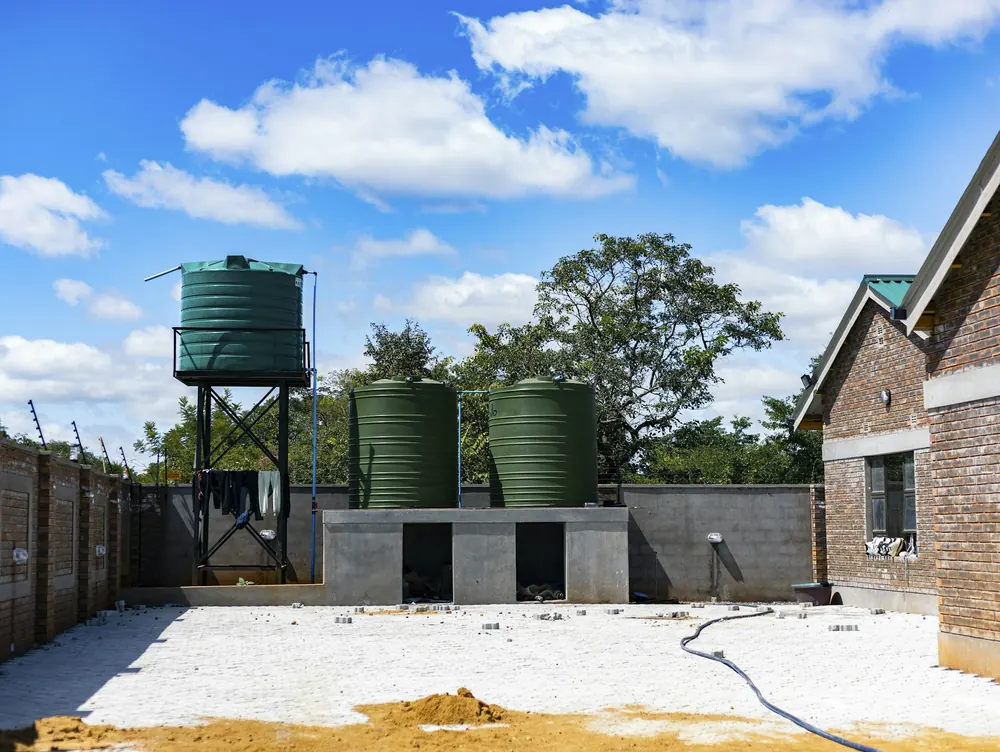
- Store water first. A tank on a stand covers short municipal cuts and lets a borehole fill it slowly.
- Check the borehole you have before the hottest months: water level, pump depth and flow.
- Test the water if you plan to drink it. Water quality can change as levels drop. See borehole water testing.
- Use garden water carefully. Household use from your own borehole is allowed under Schedule 1 of the National Water Act, but municipalities can still set rules in a drought. See borehole registration and rules.
- If you plan to drill, drill early. In 2015 the demand came all at once, after the taps started running dry. Booking before the rush lets the site visit set the depth and the pump with room for a dry season.
Should I drill a borehole before El Niño gets worse?
If your area loses municipal water often, or you are on a farm or smallholding that depends on rain, now is the better time. Our rates start at R295 a metre. Type your address in our borehole price tool to see the depth and price for your plot, built from the government water records around you. Then see the full breakdown on borehole drilling prices and how deep boreholes go in your province.
Questions people ask
Is 2026 an El Niño year?
Yes. NOAA has an El Niño advisory in effect, and SAWS said on 30 September that El Niño was already strong and likely to become very strong within a couple of months.
When will El Niño end in South Africa?
Forecasters expect it to last through about January–March 2027, so through the 2026/27 summer.
How does El Niño affect South Africa?
It usually means less rain and more heat over the summer-rainfall areas. SAWS expects below-normal rain over most of the country this summer, with the north-eastern half most at risk, and more frequent heatwaves.
Will there be water rationing because of El Niño?
Dams are full going in, with the Vaal at 108.2% on 12 October, so dam-driven rationing is unlikely early in the summer. Expect more and longer water cuts in heatwaves, and watch smaller towns that rely on local dams.
Will boreholes dry up in El Niño?
Some will run low. Shallow, low-yield boreholes and those where many neighbours pump the same water are most at risk. In 2015/16 boreholes in the worst drought areas dried up while new ones were being drilled.
How do I prepare for El Niño?
Add water storage, check your borehole’s water level and pump depth before the hottest months, test the water if you drink it, and drill early if you plan to.
Related
Where these numbers come from
- NOAA Climate Prediction Center: ENSO Diagnostic Discussion, 8 October 2026
- SAnews: Authorities urge early action as El Niño threatens heat, drought and fire risks (18 September 2026)
- Nova News: SAWS predicts frequent heatwaves and regional water scarcity (2 September 2026)
- Daily Maverick, Wandile Sihlobo: Uncertainty is high as the 2026-27 summer crop season starts (11 October 2026), citing the SAWS statement of 30 September 2026
- OurPower: Vaal Dam level, reading of 12 October 2026
- The Outlier: Joburg has water issues even when the dams are full
- Daily Maverick: El Niño will likely return in 2026 (28 January 2026)
- TimesLIVE: Households tap into boreholes (13 January 2016)
- Kolusu et al. (2019), The El Niño event of 2015–2016: climate anomalies and their impact on groundwater resources in East and Southern Africa, Hydrology and Earth System Sciences 23, 1751–1762
- Department of Water and Sanitation (DWS): groundwater-level monitoring network and GRIP borehole records supplied to us by DWS GeoRequests, September and October 2026
- National Water Act 36 of 1998, Schedule 1 (permissible use of water)
Get a price for your borehole
Type your address and see the price line by line, with the water records around your plot. A site visit confirms the spot, the depth and the final price before any drilling starts.